Knowledge has limits. Imagination encircles the world.
ArtLab is a collective under The Spring Institute that aims to put imagination and creativity at the core of spreading life to the stars.
LE JARDIN LUNAIRE
Le Jardin Lunaire (The Lunar Garden) is an art exhibition concept that explores the beauty and mystery of lunar landscapes through various forms of artistic expression: blending art, augmented reality (AR), and new technologies.
The dome, a structure that is intentionally difficult to access, symbolizes the conquest of the Moon, a crucial milestone for humanity’s curious and exploratory nature. The shape of the dome also represents a lunar future where organisms could be cultivated. The innovate creations invites participants to reflect on our interplanetary future. Will we one day have gardens on the moon?
MYCELIUM AND ART
The dome in Le Jardin Lunaire will be made from mycelium, a fungal network that thrives between forests and soil, connects plants, and breaks down organic material. Mycelium is an extraordinary material with many sustainable uses and is increasingly replacing fossil-based materials in daily products.
Mycelium made from the Ganoderma fungus is lightweight and biodegradable but also strong. This makes it a great material for sculptural installations. The organic aesthetics of mycelium structures also evoke a sense of otherworldly beauty.
Mycelium plays a big role in Earth’s biological cycle. Using it in this installation serves as both a conceptual and practical exploration of how biology (and biological materials) might shape the future of interplanetary habitation. Plants growing on mycelium thrive, making mycelium a great candidate to help vegetation grow beyond Earth—in a sustainable and regenerative way.
Visualized below: the process of creating a dome with mycelium. Note that for Le Jardin Lunaire, we will be using a mold made from algae-derived bioplastic from Eranova.
1. Fungi type ganoderma is selected as it can be transformed into a hard material.
2. A balloon is being used to create the mold.
3. The balloon is being covered in bioplastic wrapping and clear tape to make the mold strong.
4. A combination of mycelium, paper towels, coffee grounds, some straw and potato starch is used to create the form.
5. The bottom part of the form is being covered by cling film.
Mélodie C. is The Spring Institute’s resident artist.
Her work is inspired by the fusion of traditional art and new technologies.
Specializing in Metaverse and animation in Japan, Mélodie aims to share what she has learned in Japan—a country at the forefront of technological advancements—and integrate these insights into an immersive artistic project centered on Le Jardin Lunaire in Pleaux.
We are working with biologist Lynn Carr to develop the mycelium.
Lynn Carr is the founder of Champignon Coussacois, a French company specializing in the cultivation and sale of high-quality mushrooms, including artistic and decorative items made from mycelium.
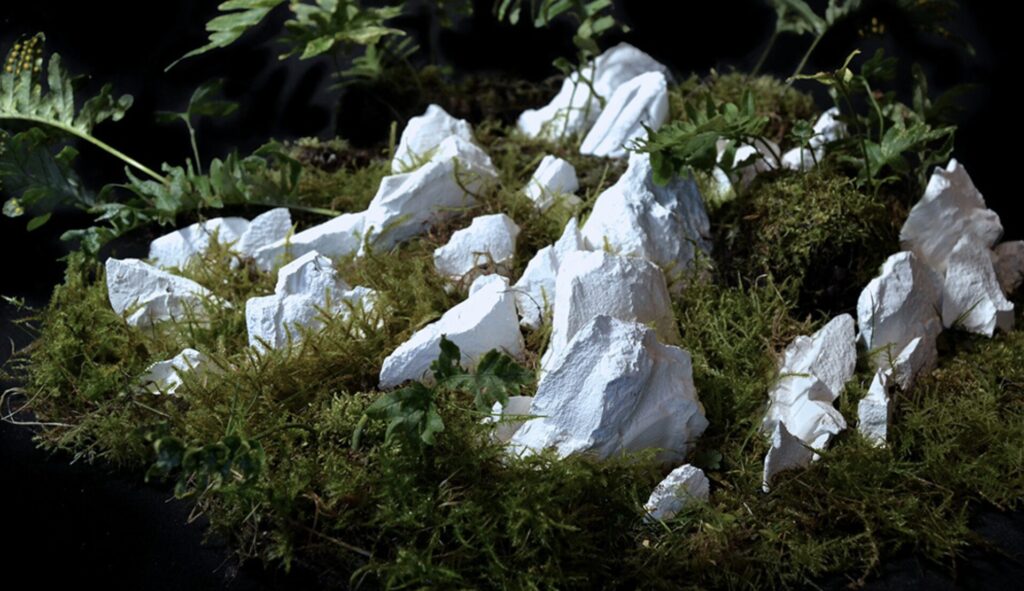
Pictures to the right and below are from Carr’s mycelium collection.
ArtLab is working with Audrey Quentin. She is a multidisciplinary artist based in the French Pyrenees since 2016.
A graduate of the École Supérieure d’Art et de Design de Tarbes, she draws inspiration from the region’s landscapes and ecosystems.
Her practice, shaped by hiking, canyoning, and caving, explores hidden worlds, non-human life, and the shifting boundaries between the mineral, vegetal, and aquatic.
THE SPRING ART WALK
The Spring Art Walk combines multiple installations to create an interactive experience across Pleaux, where visitors can explore sgraffito walls, storefronts, and small, scannable installations tucked away in alleyways. The Spring Art Walk took place in the summer of 2025.
Amélie Mondejar
We are partnering with Amélie Mondejar, a sgraffito artist.
Sgraffito is an art technique in which a top layer (of glaze or paint) is scratched away to expose the color underneath, creating depth in the artwork.
Amélie will create a map on a wall at Pleaux College using this technique.
This is the question that the figurines and birds above ponder. The installation is a meditation on freedom and the human spirit that travels through imagination, exploring the far reaches of space and the limits of human experience.
The installation was displayed in a storefront in Pleaux, France. The figurines are were created from mycelium. The artwork also featured Japanese kanji and similar shapes, representing the Moon and stars which added a cultural and mystical dimension to the installation.
INTERACTIVE ART
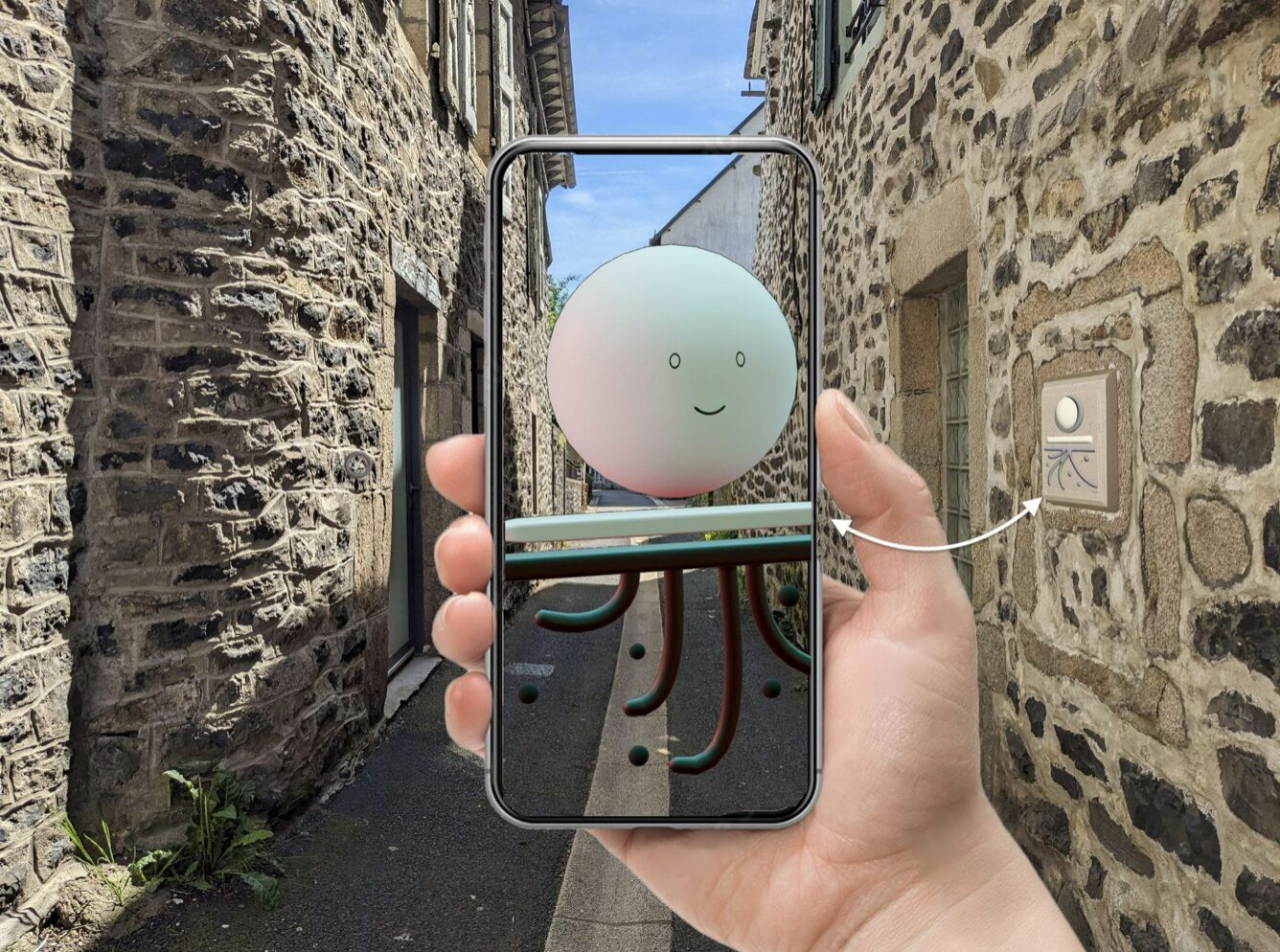
The fabrication of enamels on lava, representing the different sections of the Spring Institute, is being done in collaboration with local artisans. The lava enamels will be hidden throughout Pleaux, and visitors will have to find them during the Art Walk. They will be combined with augmented reality, allowing visitors to simply use a smartphone to reveal the associated 3D object for each enamel tile.
SPONSORS & ARTISTS
A big thank you to Eranova, Lynn Carr & Champignon Coussacois, Emyr Fivestarz, Amélie Mondejar, Julie Daô Van Ô and the rest of our partners.