ArtLab connects young people, artists, and scientists around space exploration, ecology, and biomaterials — through workshops, exhibitions, and immersive experiences.

Space constraints become a driver to imagine sustainable solutions for Earth. Through dialogue between artists and scientists, we make these challenges accessible.
Scientific
Ethical
Creative
Adapt Spring's hands-on school workshops — digital fabrication, augmented reality art, and biomaterials — for students, families, and educators.
Extend Spring's model by pairing visual artists with life-support researchers to create new site-specific work rooted in real science — drawing a direct parallel with the challenges we face here on Earth.
Bring Spring's Moving Museum or Lunar Garden series to a flagship venue, pairing original artworks with real space ecology research. AR virtual museum to be developed.
Build bridges between cultures through art and space research; fostering the sharing of diverse perspectives. ArtLab to be held in Japan.
Animation film · Outreach programme
A feature-length animated film imagining a low-tech lunar station — and how life slowly finds its way inside it. Currently in development and seeking funding partners, with a shorter cut intended for screening at ArtLab exhibitions. This outreach programme is a larger, independent film project run in parallel to the ArtLab.
Outreach & partnerships
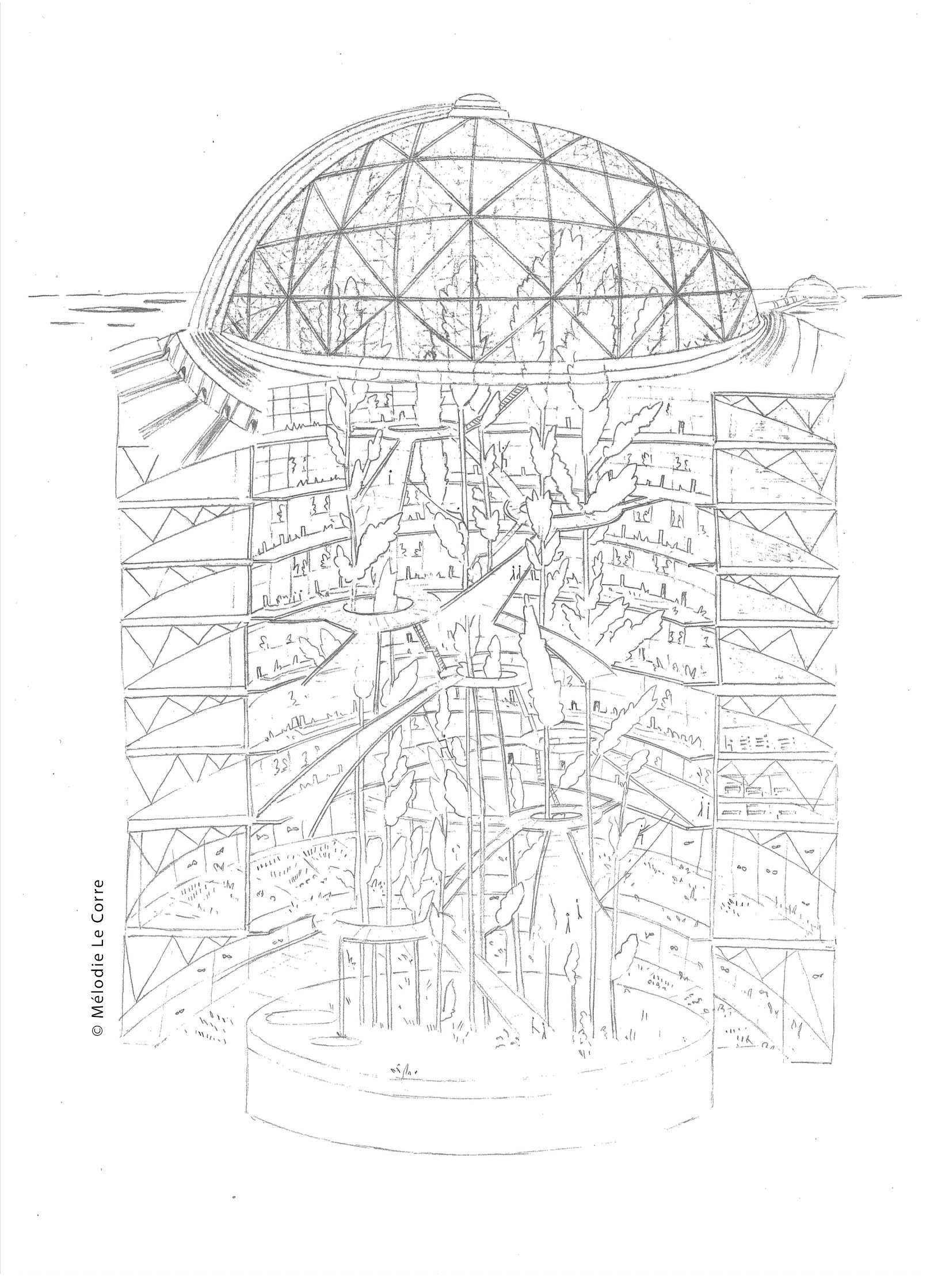
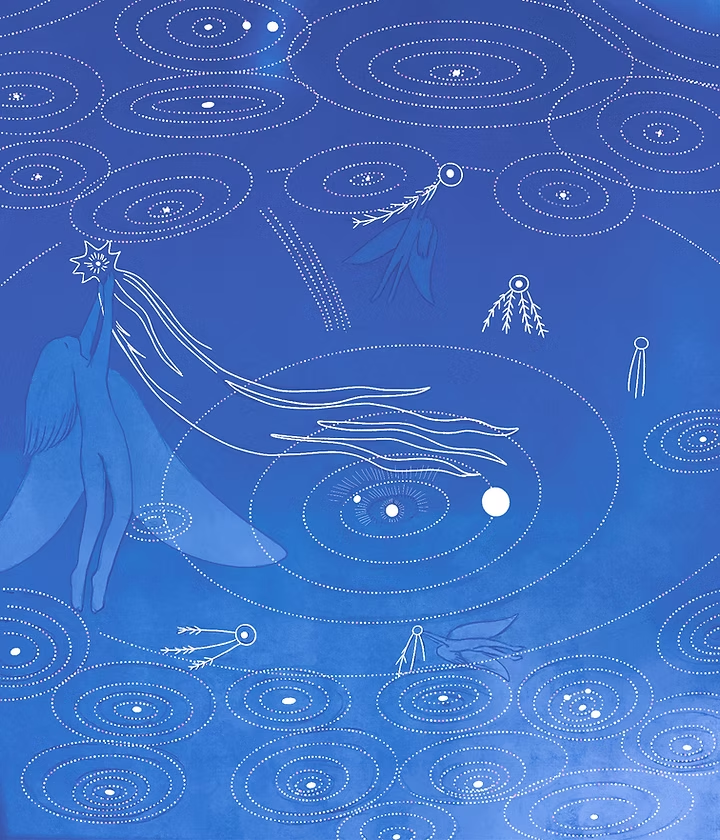
Feature-length animated film — a larger, independent project run alongside the ArtLab
Currently seeking funding & outreach partners
A shorter cut is intended for screening at ArtLab exhibitions
Launched via Exolaunch · SpaceX Transporter-17
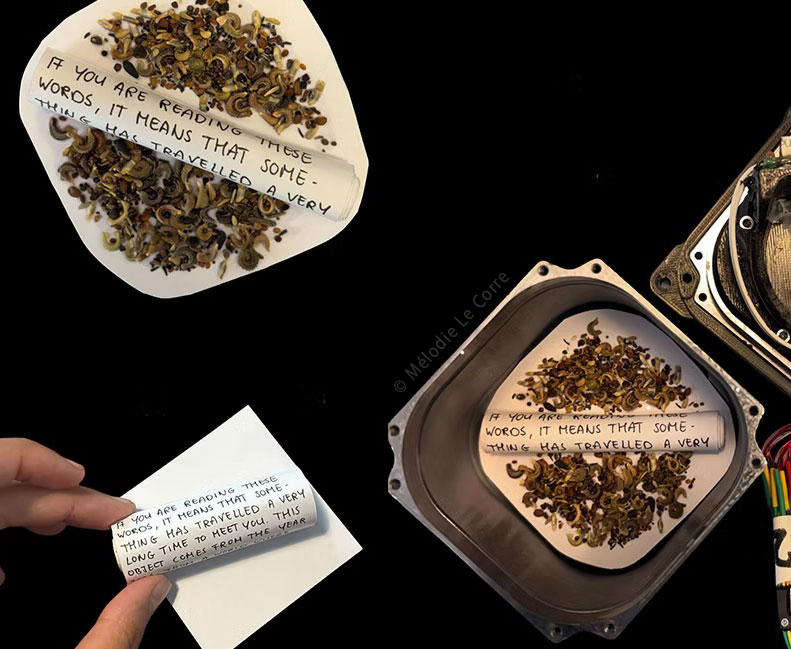
A satellite artwork by Mélodie C., launched aboard Tumbleweed's Pod Alpha module. REVIVE began as a scientific mission to send a living micro-vernal pool into microgravity; after a container leak was found before testing, the project was reimagined as an artwork carrying prairie flower seeds and a letter for whoever might one day find them — a reference to the mother in Kazuo Umezu's The Drifting Classroom, who sends a letter to her son after he is thrown forward into a future desert. The piece is the artist's promise: to try to keep that future from becoming a desert.
Participating artists
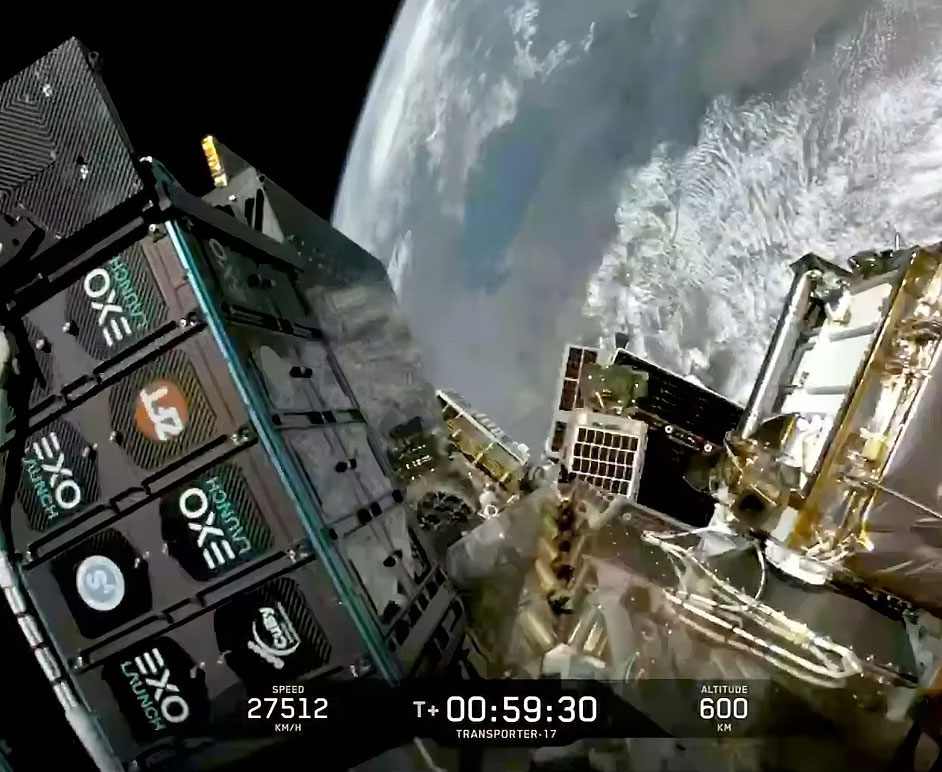
First ArtLab work in orbit — launched via Exolaunch aboard SpaceX Transporter-17
Mission reimagined after a container leak — from a living micro-vernal pool to prairie flower seeds
A letter travels alongside the seeds — a reference to Kazuo Umezu's The Drifting Classroom, and a promise that the future won't become a desert
Chapelle Saint-Joseph & Collège de Pleaux
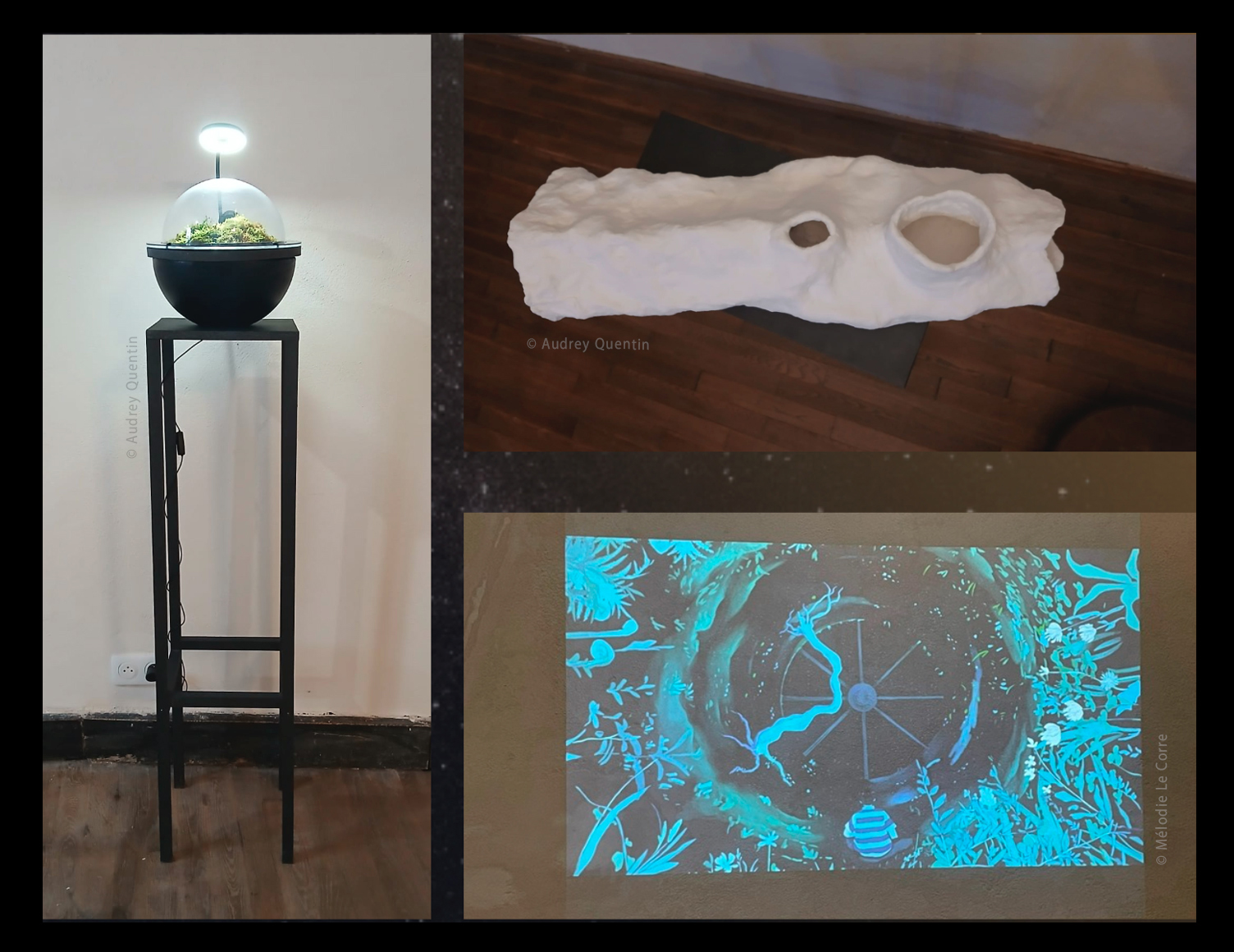
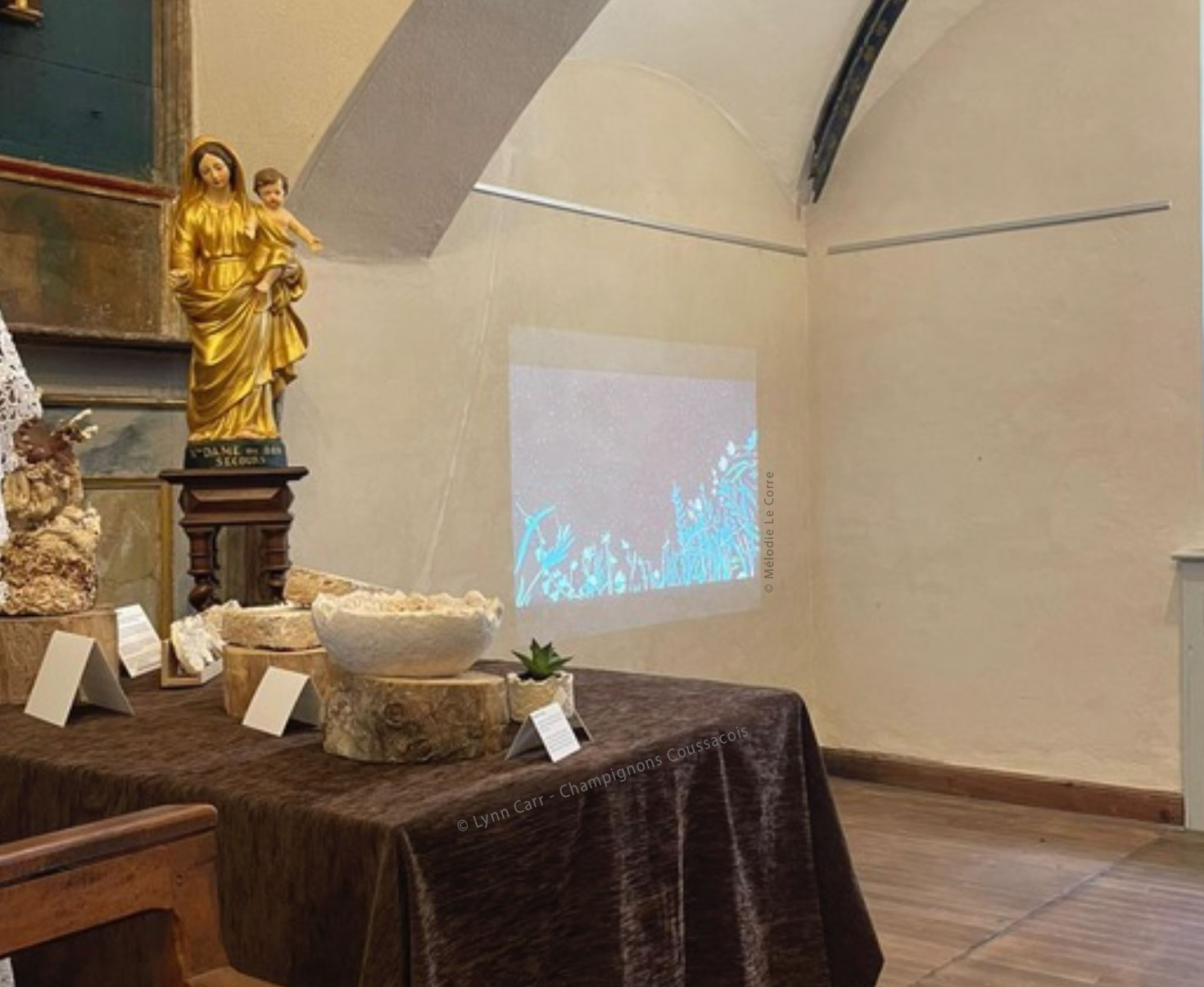
The most ambitious edition to date — five artists, a monumental mural, and a scientific gathering. The show united the Mycosphère dome prototype, lava tunnel installations, sci-fi meteorite sculptures, and a looping animation projected in the chapel. Funded by Culture en Territoire, Région Auvergne-Rhône-Alpes.
Participating artists
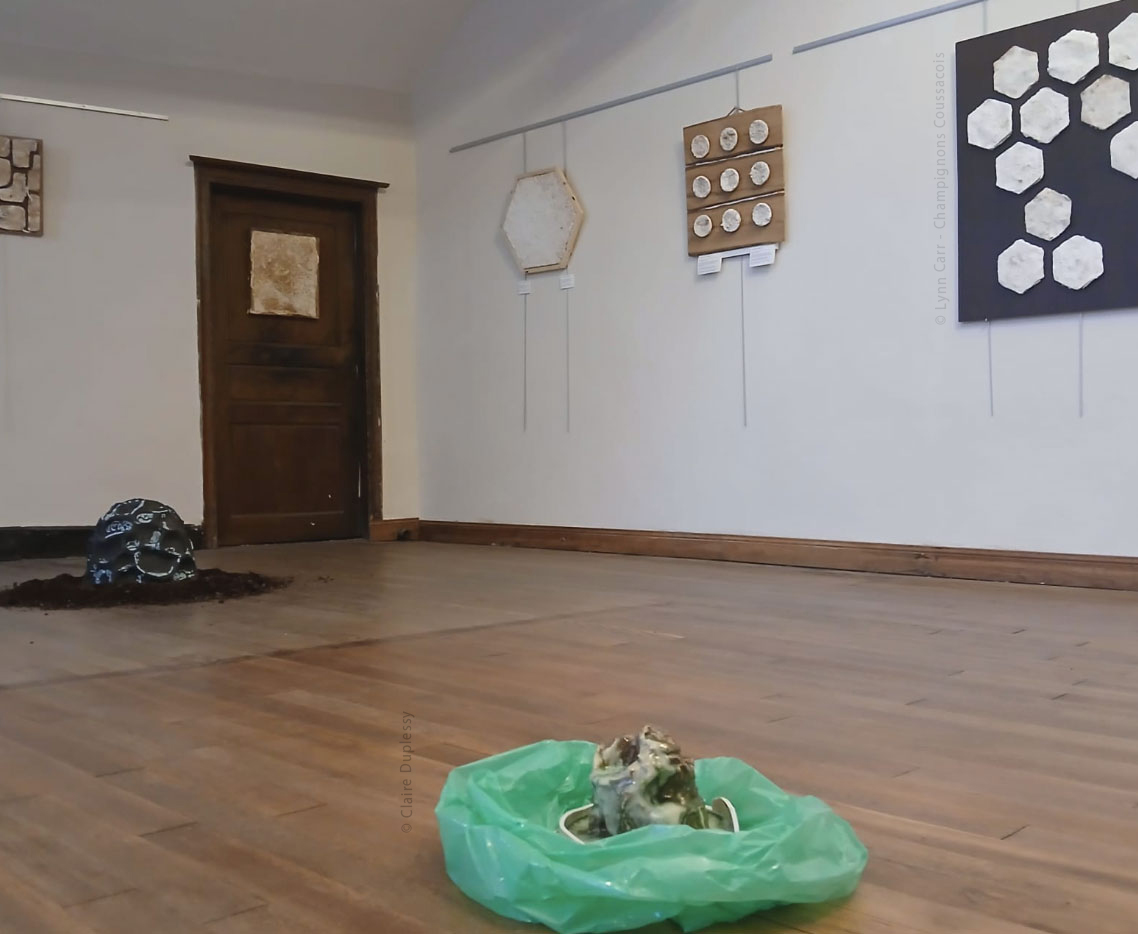
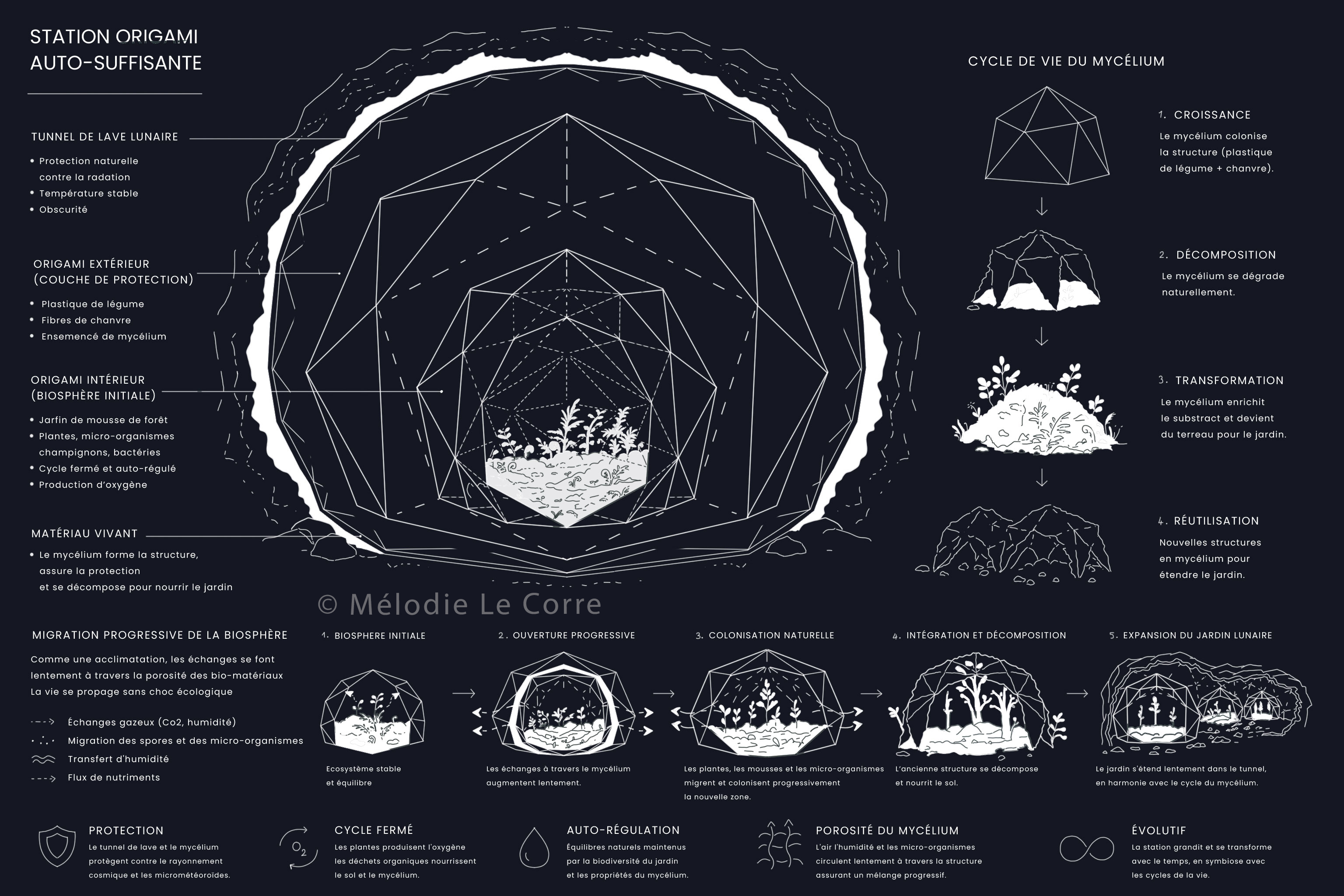
Mycosphère dome — first mycelium lunar-station prototype
Permanent mural at Collège de Pleaux — co-created with students
Funded by Culture en Territoire, Région Auvergne-Rhône-Alpes
Saint-Cernin — Autumn Exhibition
The autumn edition brought Le Jardin Lunaire to a new community — presenting for the first time the mycelium structural prototypes developed with Champignons Coussacois, alongside new paintings by Mélodie C.: lunar stations rendered in a natural blue — a colour that also stands in for Earth seen from space. Audrey Quentin also presented works around forest mosses and mycelium — among the earliest forms of life on Earth, and perhaps one day on the Moon — alongside her meteor fabrication workshop for schools and the general public. Press attended, including an interview on France Bleu Auvergne.
Participating artists
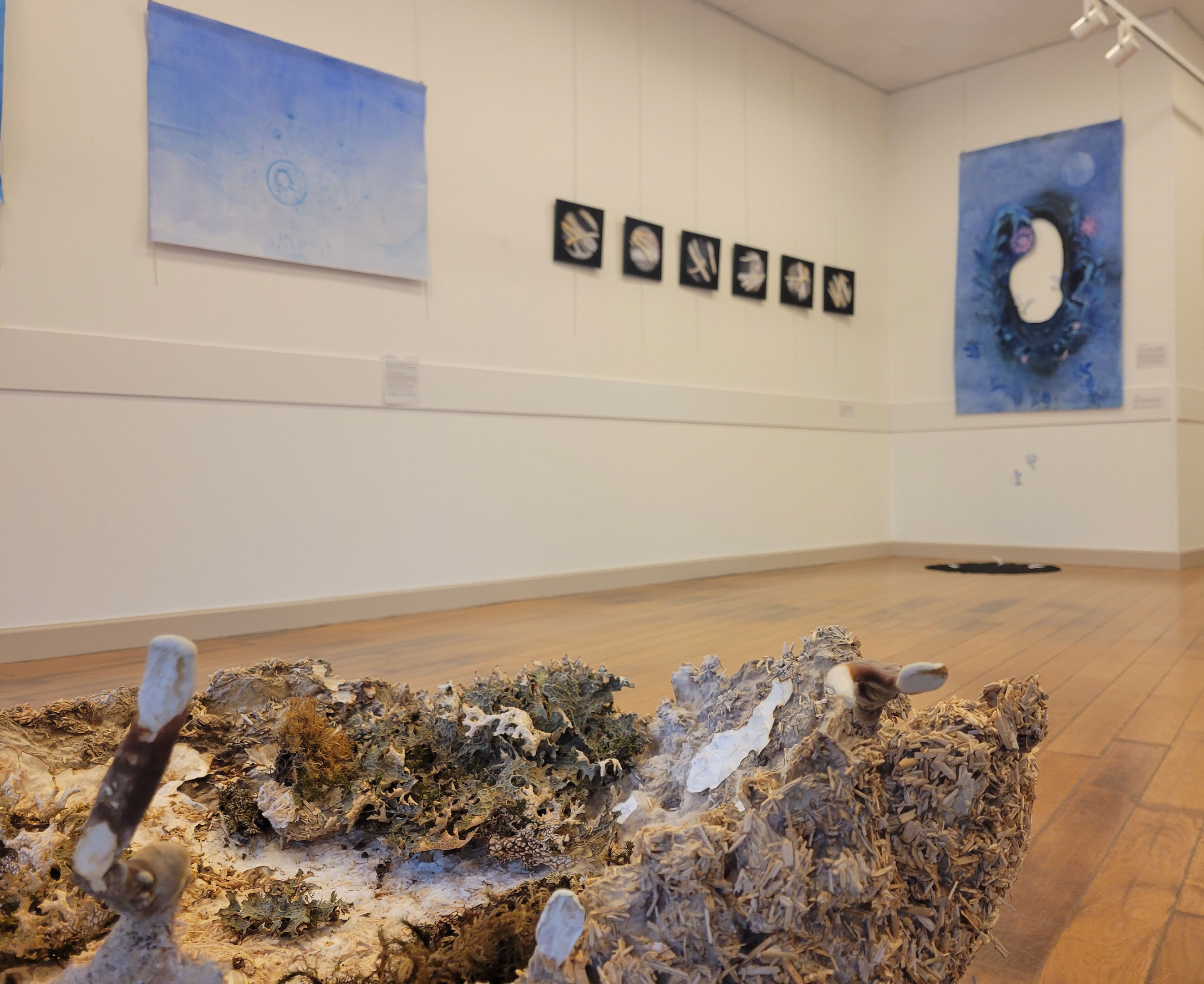
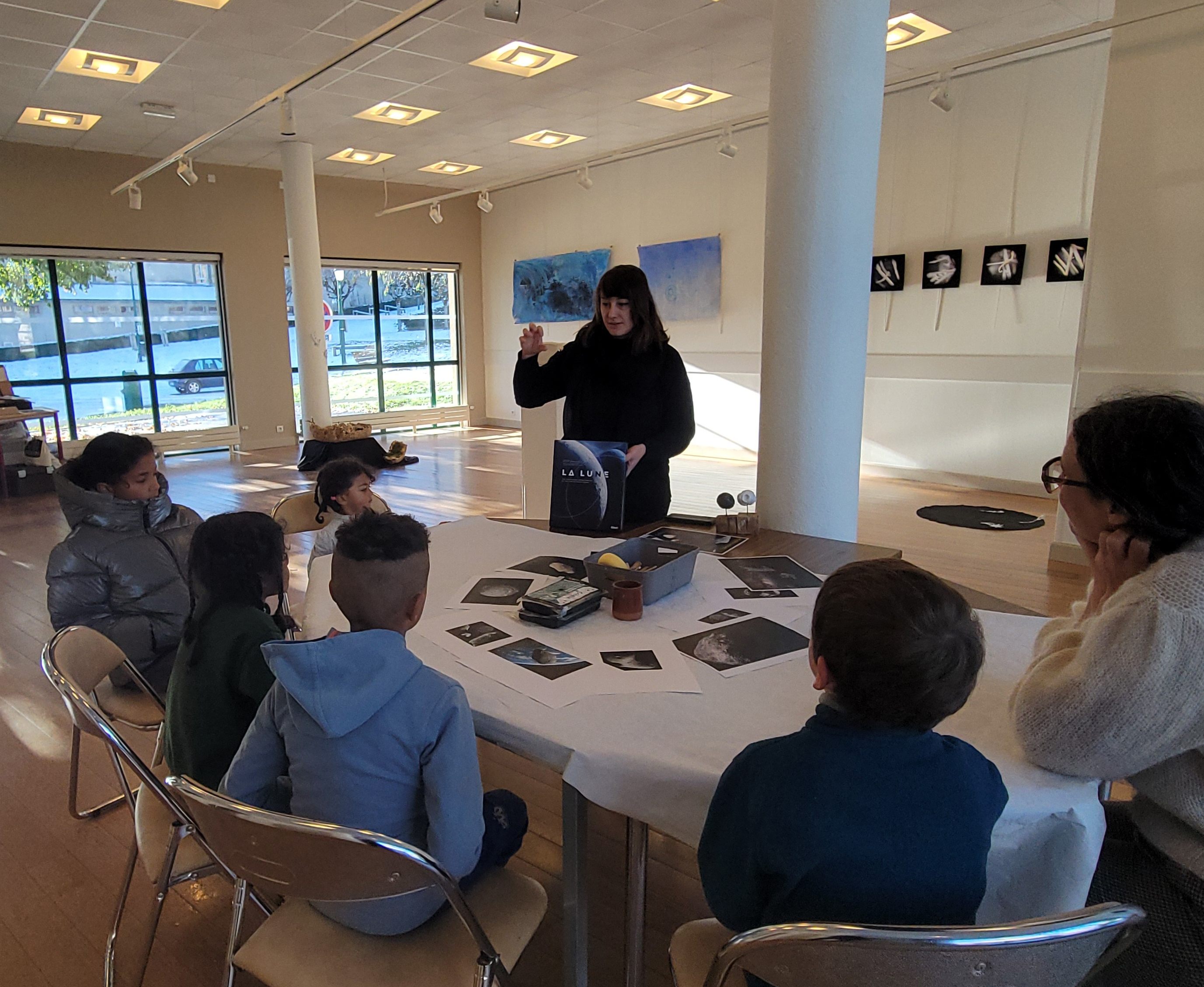
First itinerant stop — ArtLab reaches a new Cantal community beyond Pleaux
Premiere of mycelium structural prototypes in collaboration with Champignons Coussacois
Press coverage — including an interview on France Bleu Auvergne
Office du Tourisme de Pleaux
The inaugural ArtLab exhibition. Three artists — Mélodie C., Audrey Quentin, and Lynn Carr — presented works at the Pleaux tourist office over the summer. The show explored lunar habitat, mycelium biomaterials, and speculative ecology, bringing space science to a rural summer audience. School workshops ran simultaneously at the Collège and École primaire de Pleaux.
Participating artists
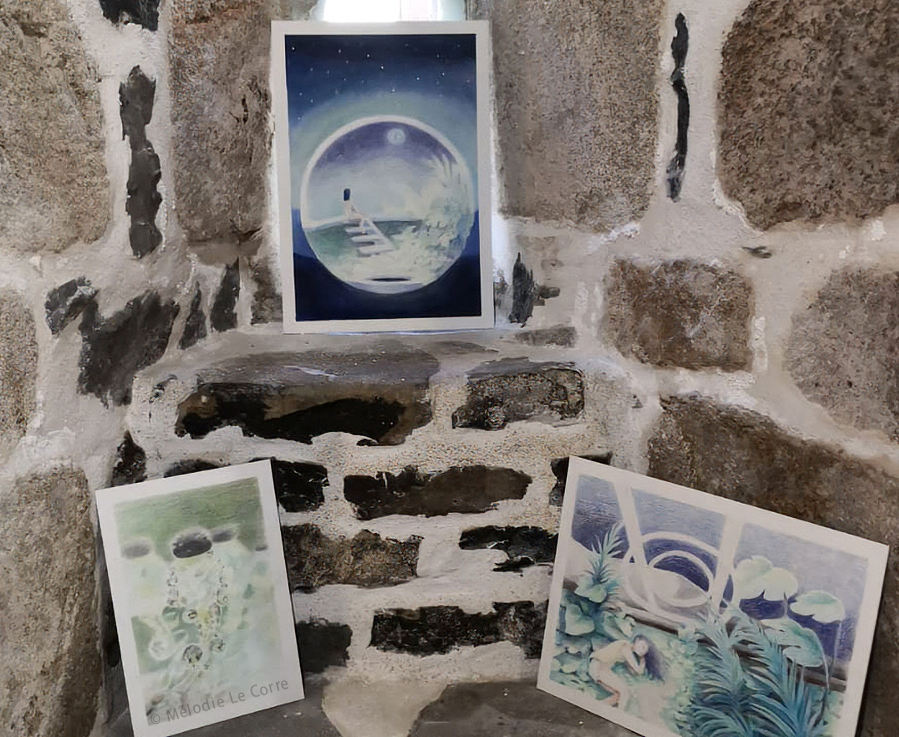
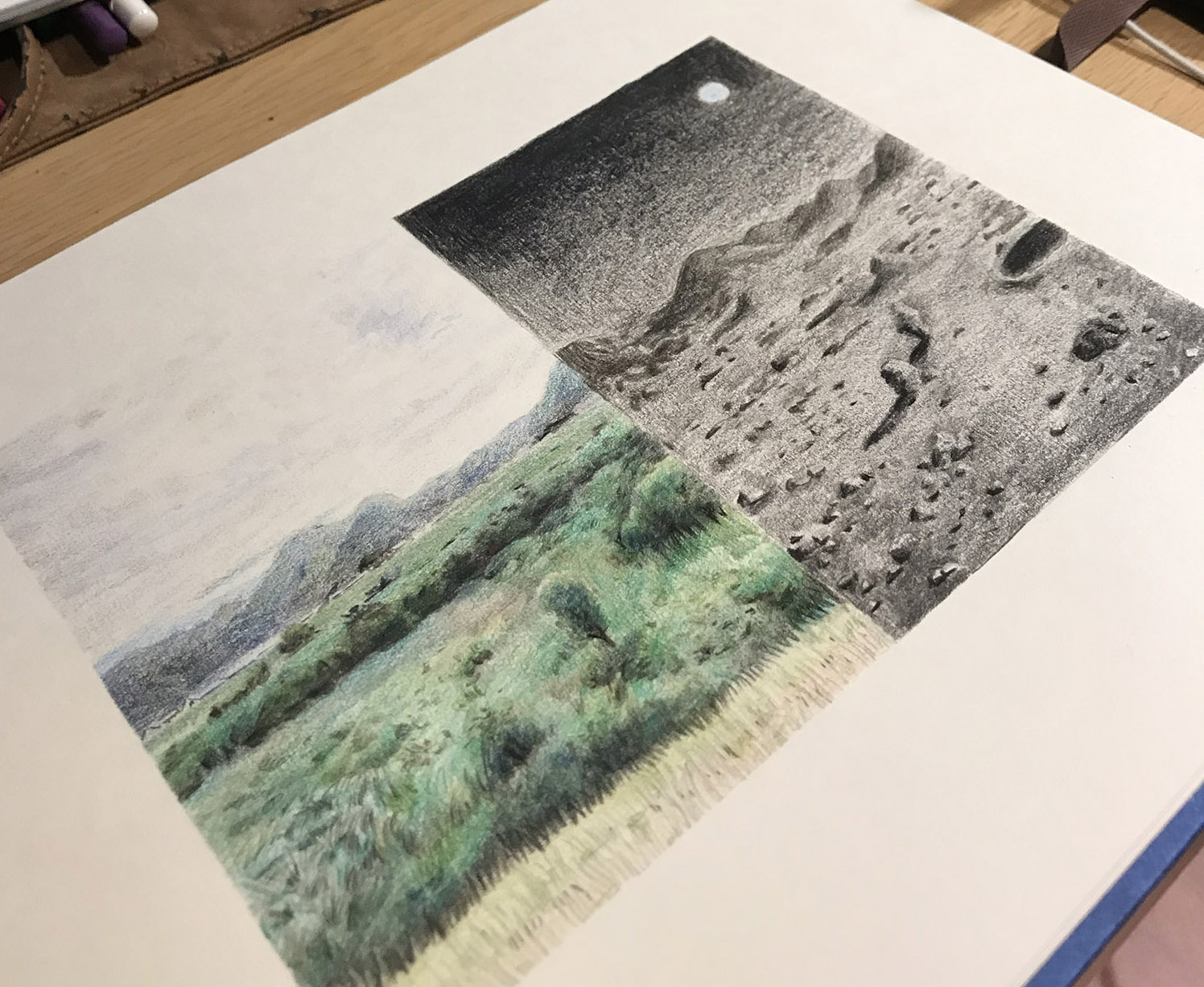
ArtLab launch — first public exhibition of the Spring Institute artistic programme
1-artist residency with parallel workshops at Collège and École primaire de Pleaux
First public presentation of mycelium biomaterials research for future space habitats
Mycelium — the underground network of fungi — can bind organic matter into a solid, lightweight material. It grows in the dark, repairs itself, and at the end of its life, disappears back into the earth. We're exploring whether it could one day grow into habitat structures on the Moon. Right now, it is being grown into sculptures in a village in the Cantal.
This is the Dhome — dome + home. A prototype designed by Mélodie C. and built with Champignons Coussacois. Outside, a mycelium-based structure tested by ESTACA engineers. Inside, a place to stand and imagine.
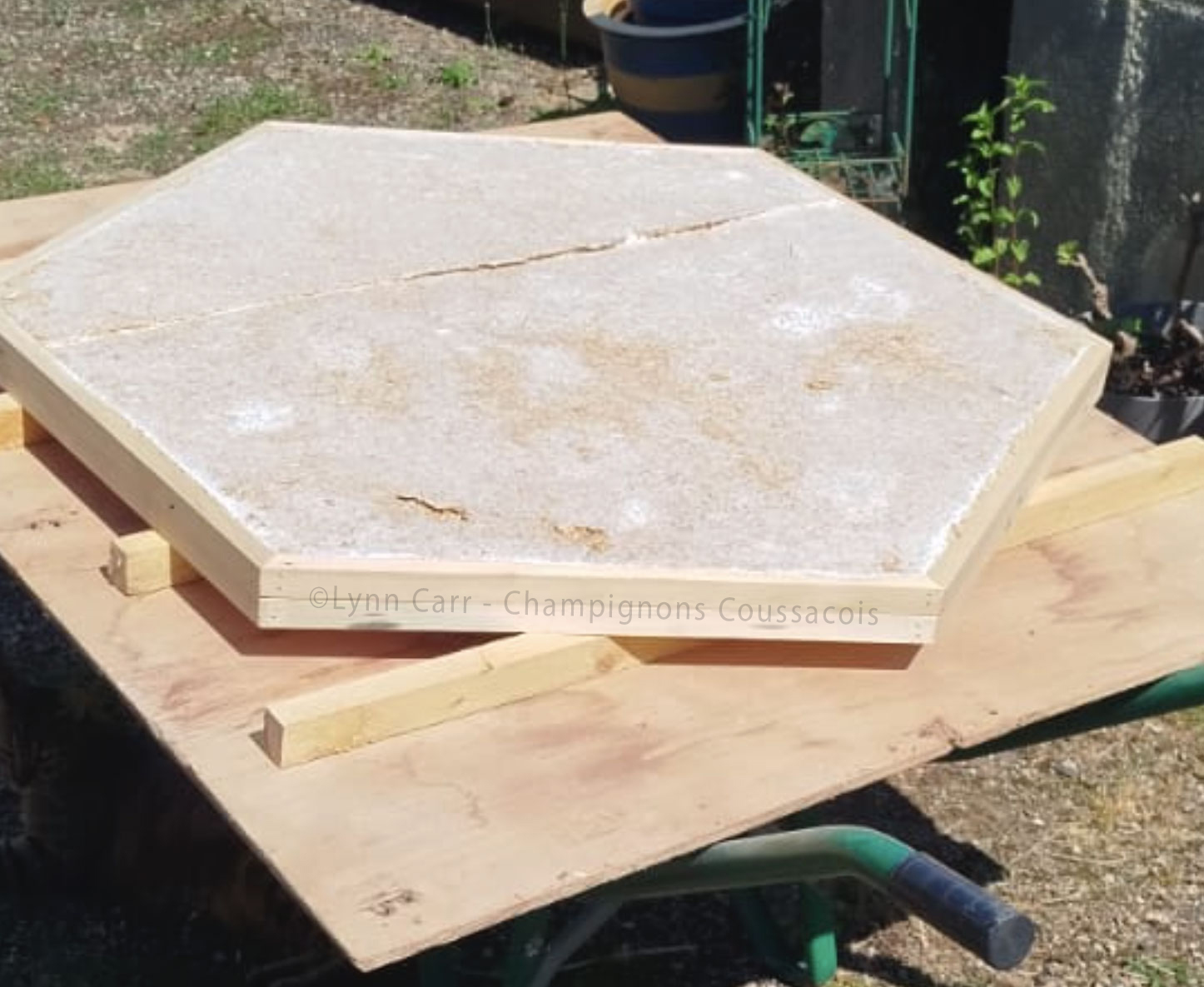
Grows on organic waste at room temperature — no furnace, no factory.
Produced on-site from local materials — critical for the Moon, useful on Earth.
Repairs itself when rehydrated — and may shield against radiation.
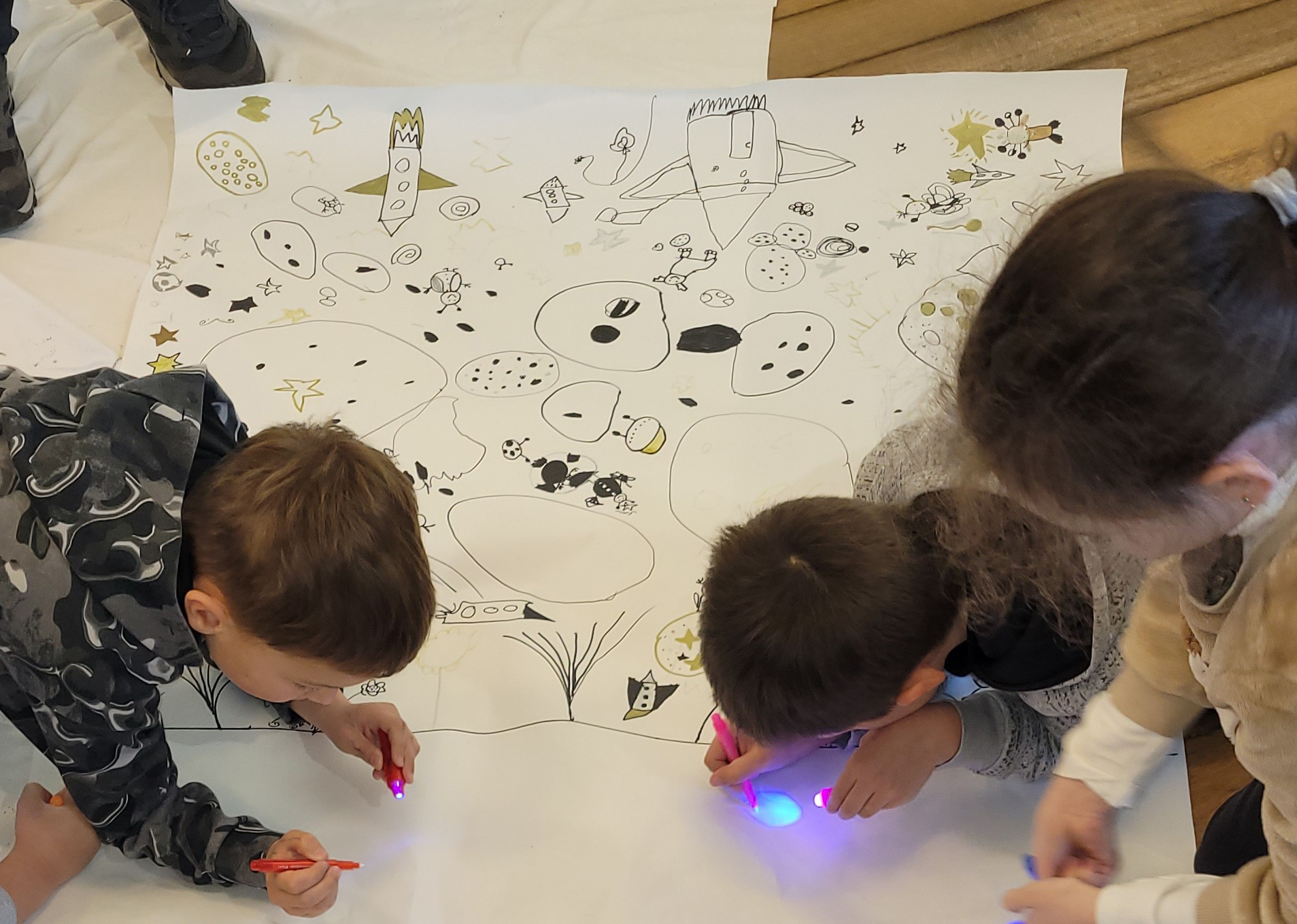
Developed alongside the exhibitions, each workshop series engages a different public — from primary school students to adults — through hands-on artistic and scientific practice.
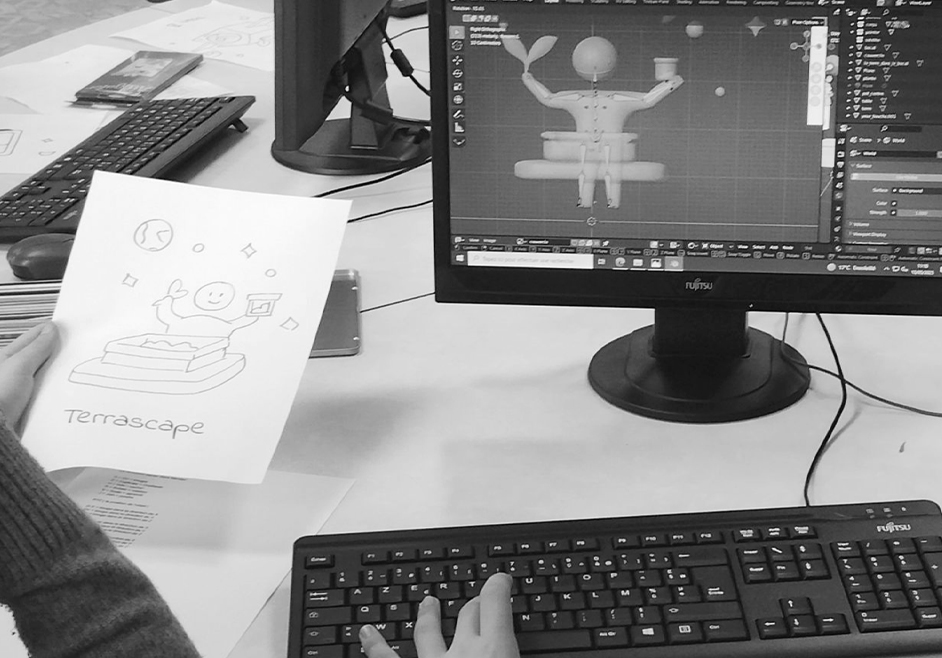
Students design objects using 3D modelling and augmented reality, placing them across village storefronts to form a science/art trail discovered via QR codes.
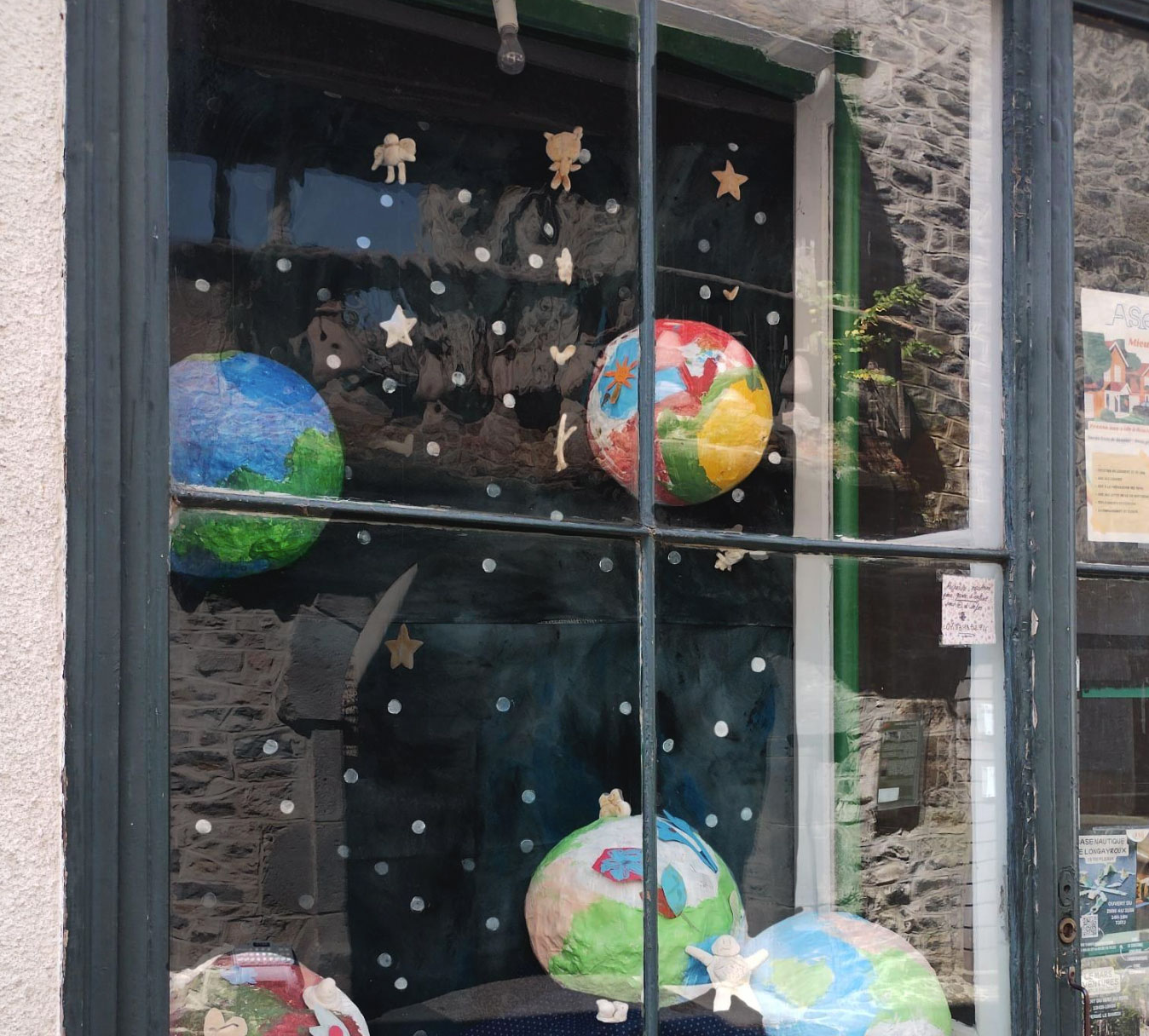
Primary school children imagine plant life for a wild, faraway planet and build paper-mâché sculptures displayed in village storefronts — a nod to the animated film The Man Who Planted Trees, and to Spring's ambition of one day planting on the Moon.
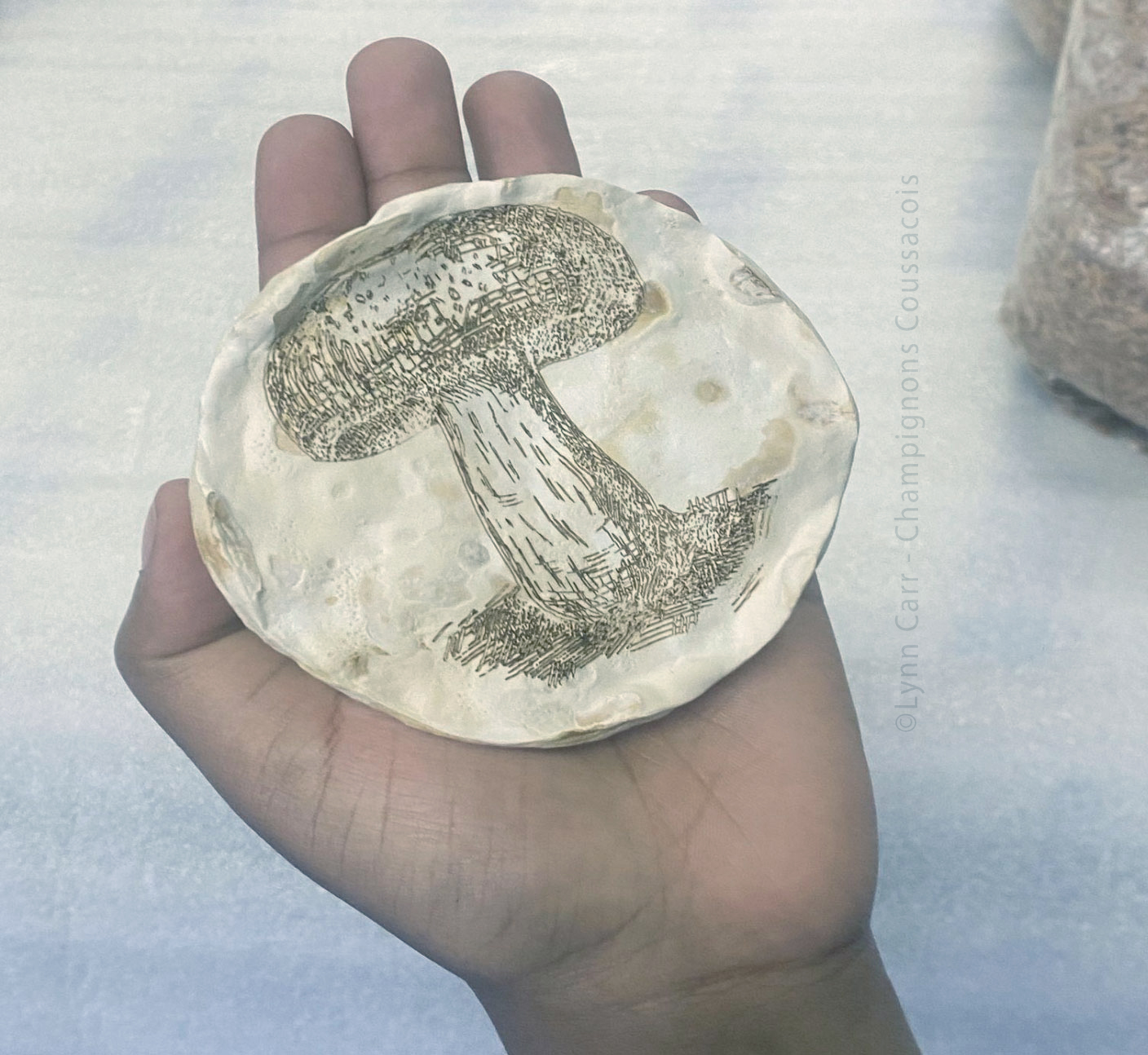
Hands-on fungal cultivation in partnership with Champignons Coussacois — inoculation, sculpture-making, and insulation experiments.
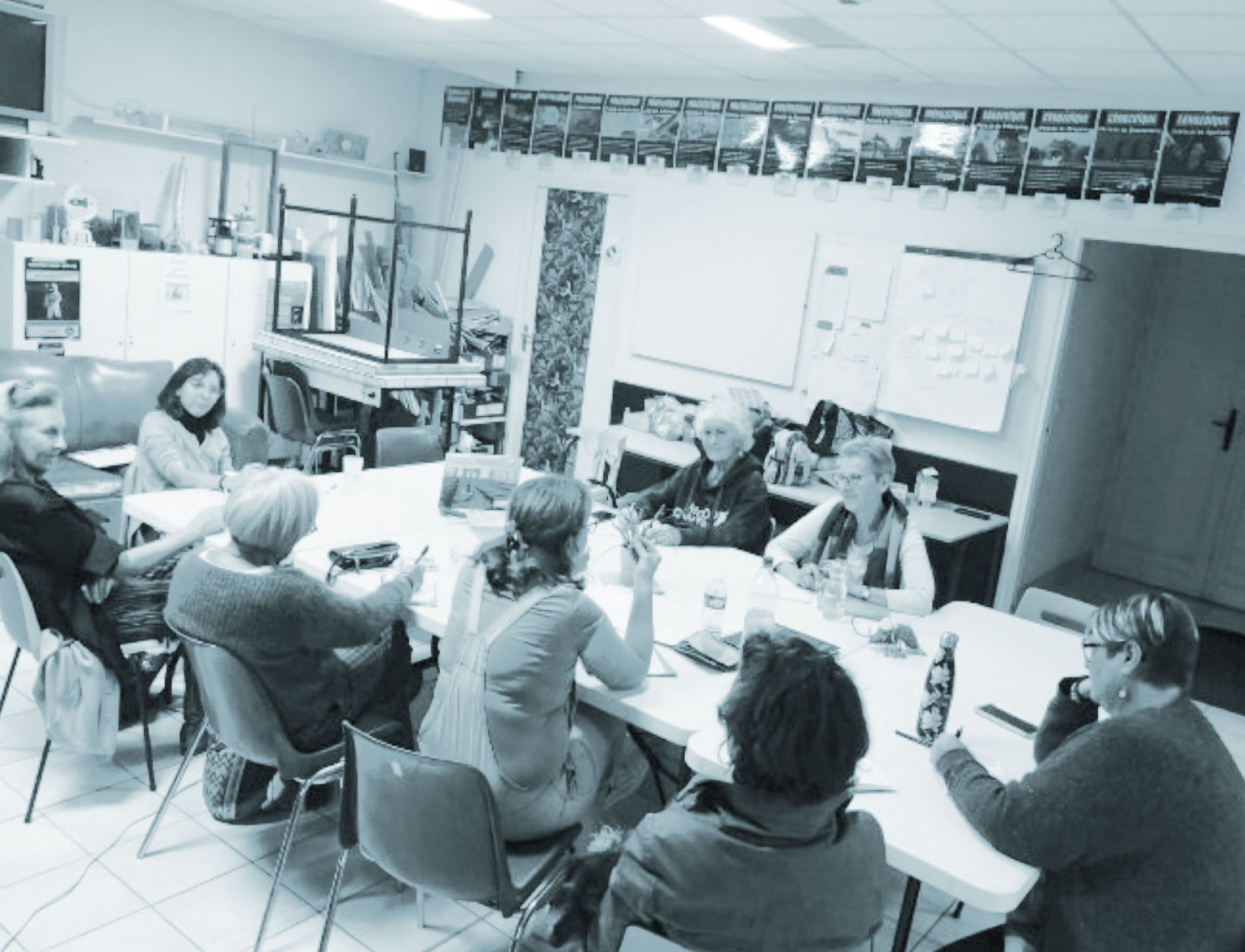
Speculative future narratives — participants write short stories imagining life in lunar habitats.
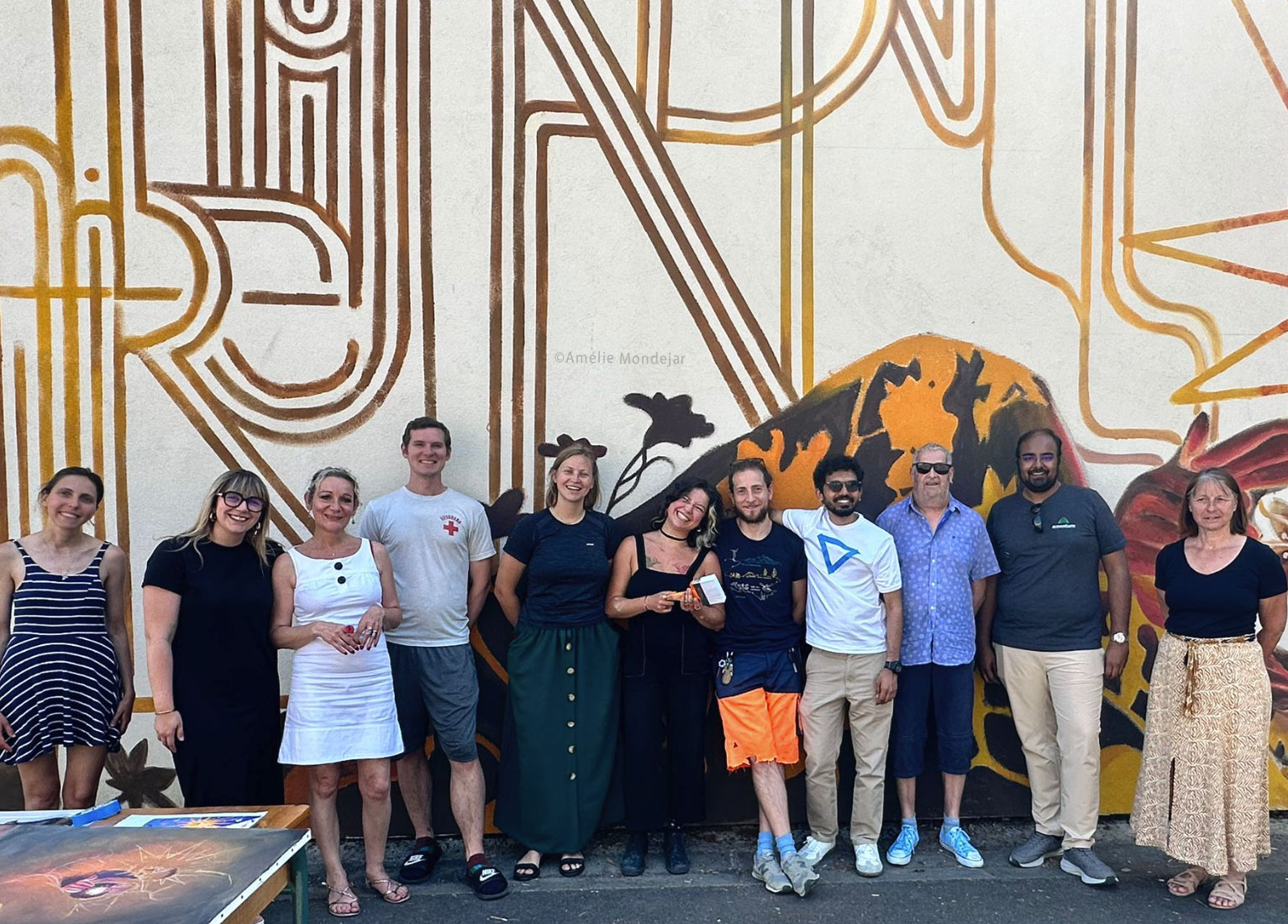
For each event, artists run workshops — meteor fabrication, mycelium sculpture, augmented reality in village storefronts, digital art. The permanent mural at Collège de Pleaux, made with the students, is a lasting trace of the ArtLab in the landscape.
Space ecology research doesn't stay in orbit — it can help answer challenges here on Earth. And when artists and scientists meet, in the space Spring creates between them, new ideas emerge that neither would have reached alone.
Volunteering, partnerships, or just a question — reach out and we'll get back to you.
Partners & supporters